A Diplomatic Stir: Israel Files Complaint Over Controversial Netta Barzilai Parody on Dutch TV
The euphoric triumph of Netta Barzilai at the Eurovision Song Contest 2018 with her empowering anthem "Toy" quickly turned into a diplomatic flashpoint weeks later, as a Dutch television parody of her winning performance ignited a fierce debate and prompted an official complaint from Israel. The incident, involving a segment on the public broadcaster BNNVARA, brought to the forefront complex discussions surrounding freedom of speech, political satire, and accusations of antisemitism, underscoring the delicate balance between artistic expression and international sensitivities.
Netta Barzilai's victory was more than just a musical achievement; her song, with its "baba-bidi-baba" sounds and distinctive chicken-like dance moves, carried a powerful message aligned with the #MeToo movement, resonating with audiences across Europe and beyond. She became an instant icon, symbolizing Israel's vibrant cultural presence on the global stage. However, less than two weeks after her win, a comedic interpretation on a Dutch TV show would unravel this positive narrative, leading to accusations of an antisemitic parody and a formal diplomatic protest.
The Performance That Sparked Outrage: Reworked Lyrics and Provocative Visuals
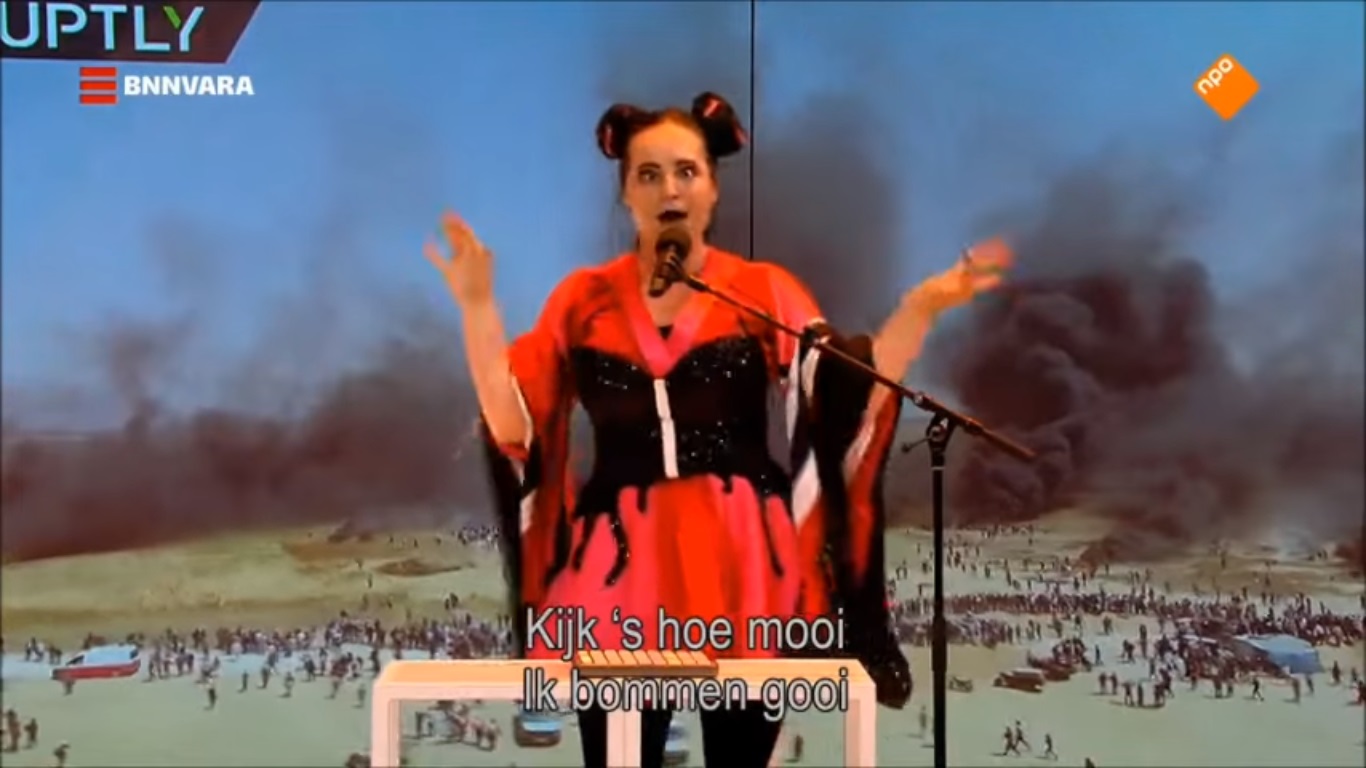
The segment in question aired on "Sanne Wallis de Show" on Sunday, April 20th (though other sources say May 19th), featuring Dutch actress and cabaret artist Sanne Wallis de Vries. Mimicking Netta Barzilai's iconic multi-colored kimono and distinctive vocalizations, de Vries delivered an interpretation that, on the surface, seemed like a standard comedic take. However, the controversy truly began when de Vries deviated significantly from the original lyrics of "Toy," introducing politically charged content and accompanying visuals that left little to the imagination.
The revised lyrics, sung to the familiar Eurovision tune, explicitly referenced Israel's geopolitical situation and recent events. Lines such as, "Look at me, I'm a charming little country, world leaders bravely eat from my hand and with a kiss I extinguish all fires," were quickly followed by more pointed verses: "Look how beautiful it is when I drop bombs. Again, oh yes, Israel wins. For 70 years now, this party continues." These words, interpreted by many as a direct and scathing criticism of Israeli policy, were coupled with powerful and grim background visuals depicting Palestinian protestors and the controversial separation wall erected at the Israeli border.
The timing of the broadcast was particularly sensitive. It came just days after a period of intense and deadly violence in the Gaza Strip, specifically around May 14th, when 62 Palestinians were killed by Israeli military fire during protests coinciding with the inauguration of the U.S. embassy in Jerusalem. This immediate context significantly amplified the perceived offensiveness of the parody, transforming it from a mere comedic sketch into a potent political statement that many deemed inappropriate and inflammatory.
The Diplomatic Fallout and Accusations of Antisemitism
The Israeli Embassy in the Netherlands swiftly condemned the parody, describing it as "shameful" and in "bad taste." This initial outrage escalated into a formal diplomatic complaint. The Israeli Ministry of Foreign Affairs sent a letter to BNNVARA, the Dutch public broadcaster, with a copy forwarded to the Dutch Ministry of Foreign Affairs, articulating the gravity of their concerns.
The core of the Israeli complaint focused on specific elements they identified as not merely critical, but explicitly antisemitic. Extracts from the ministry's letter, obtained by AFP, stated that the parody "unfortunately contained anti-Semitic allusions such as mocking kosher food or referring to money, in the old anti-Jewish tradition." These allusions tap into deeply ingrained historical stereotypes often used to demonize Jewish people, elevating the parody from mere political commentary to something far more insidious in the eyes of the Israeli government. Furthermore, the ministry criticized the visual backdrop, stating, "Showing sad and depressing videos in the background of the winning Eurovision song was not only in bad taste, it was also inadmissible and shameful." The combination of reworked lyrics, controversial visuals, and alleged antisemitic tropes formed the basis of Israel's accusation of an antisemitic parody. The intensity of the diplomatic response highlights how seriously such cultural expressions are taken when they are perceived to cross the line into discriminatory territory.
Satire, Context, and Media Responsibility
In response to the growing international outcry and the official complaint regarding the antisemitic parody, BNNVARA issued a statement explaining their position. The broadcaster maintained that the parody was intended to address "the events of the past week (of May 14th) in a satirical manner." They explicitly stated that the segment was "in no way a criticism of the Jewish community," seeking to distance the content from any antisemitic intent and framing it purely as political satire directed at the state of Israel and its actions, rather than its people or religion. Sanne Wallis de Vries herself notably declined to comment on the controversy.
This incident vividly illustrates the often-fine line between political satire and offensive content, particularly when dealing with highly sensitive geopolitical issues and historical grievances. While satire inherently aims to challenge, provoke, and comment on current events, its effectiveness and ethical boundaries are constantly debated. The perception of whether a piece of satire targets a government's actions or crosses into impugning an entire people often hinges on cultural context, historical awareness, and the specific tropes employed. Critics argue that satire, when it utilizes stereotypes associated with antisemitism, risks inadvertently or intentionally fueling prejudice, regardless of the artist's stated intent.
For media organizations, particularly public broadcasters, such controversies underscore a significant responsibility. They must navigate the complexities of free speech while remaining acutely aware of their platform's potential impact and the historical sensitivities of various communities. This involves not only careful consideration of content but also an understanding of how humor and commentary can be interpreted across different cultural and political landscapes. The Netta Barzilai parody serves as a potent reminder of the challenges in balancing artistic freedom with the imperative to avoid promoting hate or discrimination, especially when dealing with deeply entrenched conflicts and historical narratives.
Conclusion
The complaint filed by Israel against Dutch television over the Netta Barzilai parody highlights a crucial and ongoing global discussion about the boundaries of satire, the interpretation of political commentary, and the persistent vigilance against antisemitism. While the Dutch broadcaster defended the segment as political satire targeting specific events, the Israeli government viewed it as an antisemitic provocation, citing the use of historical tropes and the insensitive timing. This incident underscores that in an interconnected world, cultural expressions can have significant diplomatic repercussions, demanding careful consideration of context, intent, and perceived impact. It reinforces the need for ongoing dialogue and mutual understanding to navigate the intricate landscape where freedom of expression meets the imperative to combat prejudice and maintain respectful international relations.